Rosa Plena
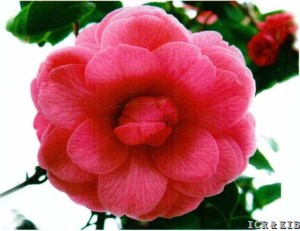
An 1829 French cultivar from the Baumann nursery in Alsace — described as producing variable flowers in clusters of two or three on strong compact growth.
One of the early European camellia introductions, first described and illustrated in Baumann & Baumann's Collection de camellia élevés à Bollweiler (1829). The large rose-red formal double flowers are notable for their variable form and for occasionally appearing in clusters of two or three — an unusual habit among japonicas. New growth emerges copper-colored, and leaves are described as small, long, flat, and serrate from base to apex. Berlèse's Monographie (1837) adds detail on the elongated, recurved leaves with conspicuous venation. Listed locally as 'Rosa Plena' and registered as 'Rosea Plena.' Source: International Camellia Register.